Could 100 Coughing Titan Babies Beat One Baby Nuclear Bomb?
Portions of this blog post relied on A.I. assistance. Turn on AI Lens to see where A.I. wrote, helped edit, or informed this post.
- A.I.-informedResearch or guidance; wording retained
- Reference
- Research
- Synthesis
- A.I.-assistedMy draft wording, edited with A.I.
- Mechanical
- Local wording
- Structure
- A.I.-writtenNew phrasing composed by A.I.
- Word or phrase
- Sentence
- Passage
How the levels are assigned
Each highlight is assigned from the saved draft and editing record.
A.I.-informed: A.I. supplied a source, research, or guidance used here, while the wording remained mine.
- 1. Reference: Located or inserted a source link, without extracting a fact or statistic for the passage.
- 2. Research: Extracted or checked a fact, statistic, or other specific information used in the passage.
- 3. Synthesis: Combined or compared source findings to supply a conclusion or guidance used in the passage.
A.I.-assisted: A.I. edited wording already in my draft: spelling, grammar, punctuation, emphasis, or requested phrasing polish.
- 1. Mechanical: Corrected spelling, grammar, punctuation, spacing, capitalization, or requested emphasis; no discretionary phrasing polish.
- 2. Local wording: Polished word choice, a phrase, or word order within an existing sentence, without reorganizing multiple sentences.
- 3. Structure: Reordered, combined, or recast multiple existing sentences or the organization of a paragraph; new standalone passages belong under written.
A.I.-written: A.I. composed a new phrase or passage for a placeholder, a request for new wording, or a replacement passage. My supplying the idea or approving the result does not change who composed the wording.
- 1. Word or phrase: Composed a new word, phrase, title, label, or caption fragment, rather than a complete sentence.
- 2. Sentence: Composed a complete sentence, or sentences within a larger author-written passage. A standalone sentence caption is included here.
- 3. Passage: Composed or replaced an entire prose paragraph or a larger passage, including a complete multi-sentence notice or footnote.
Research alone is informed. Editing my existing language raises it to assisted. Composing new phrasing raises it to written, even if it is just one word. Simply adding a link I supplied or putting my words into a widget does not establish an A.I. contribution to the wording.
Highlights cover the affected punctuation, word, or phrase, not the surrounding unchanged sentence. A small raised minus (−) marks a deletion. Pause over a highlight to see its category, sublevel, and recorded edit in a margin annotation. The side follows where you first paused and stays put until the annotation closes. Narrow windows use a footnote-style popup. You can also focus a highlight with the keyboard or tap it; Escape or a tap outside closes the annotation.
Sublevels follow the specific action or extent described above. They are measured within each category: written 1 still means new A.I. wording, whereas assisted 3 means editing my existing language. Mixed contributions are split where possible; an inseparable unit uses the highest category and sublevel supported by its record. A highlight does not assign ownership of my ideas to A.I.
These labels cover the recorded editing session. Unhighlighted text makes no claim about earlier A.I. involvement. Colors are contribution categories, not percentages or detector scores.
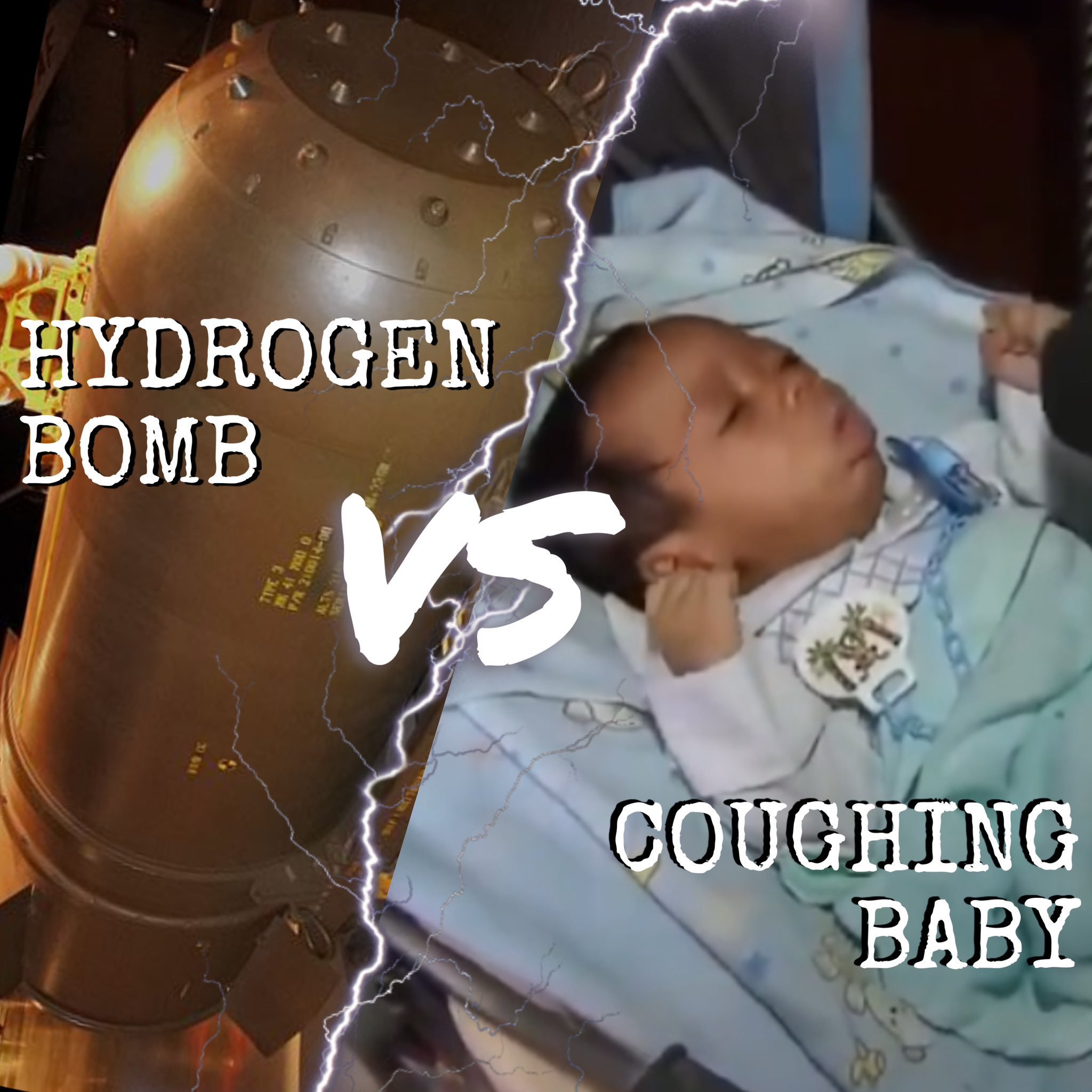
I love viral hypotheticals.
They’re so fun to talk about with other people. And they often reveal hidden assumptions in our culture. 100 men vs. a gorilla, man or bear in the forest, is a hot dog a sandwich. These are fun times in the collective discourse.
They teach us something about ourselves with a lot less of the baggage that comes with real-world viral debates—not that those aren’t extremely important. The most recent viral scandals to rock the culture—Lindsay Clancy and the Cornell 7 (nightmare blunt rotation, btw, and also sounds like a 2010s indie band?)—have ignited vital conversations that should be listened to intently.
So I’m not diminishing those. I just want to pay homage to the hypotheticals, which have their place too, and can occur without the gravity of a real-life tragedy. I wonder what next hypothetical question will captivate the culture.
Allow me to suggest a few, in jest, for your next blunt rotation:
- 100 Coughing Babies vs. 1 Nuclear Bomb, but the bomb is baby-sized and the babies are the size of the blast radius of a nuclear bomb?
- How many times in a row, without breaks, could Mariah Carey sing “All I Want For Christmas Is You” before she physically cannot do it anymore and/or dies?
- Unusual Great British Bake-Off host duos. My vote: LeBron James and Malala Yousafzai.
- What would the historical Jesus of Nazareth think of modern Christianity?
- What, if anything, would it take for you to live with a third Trump term? Reflexively, you’ll say “absolutely nothing, ever,” but everybody must have a limit, right?
I’m also curious if there are any exhaustive lists out there of all the most popular hypothetical debates of the last decade. I’m just gonna cheat and query an A.I. to figure it out. Let’s reminisce on these old but gold debates:
- Is a hot dog a sandwich?
- Is cereal soup?
- Does a straw have one hole or two?
- Would you take millions of dollars if an immortal snail pursued you forever and touching it would kill you?
- Would you take $500,000 or a meal with Jay-Z?
- Are there more wheels or doors in the world?
- Who wins: a hydrogen bomb or a coughing baby?
- Would you rather encounter a man or a bear alone in the woods?
- Could 100 ordinary men beat one gorilla in a fight?